The Sierra & the Work
Ranch life in the mountain forest.
A day immersion in working cattle ranches within the Sierra de la Laguna UNESCO Biosphere Reserve, where families practice centuries-old stewardship of mountain ecology and dairy traditions.
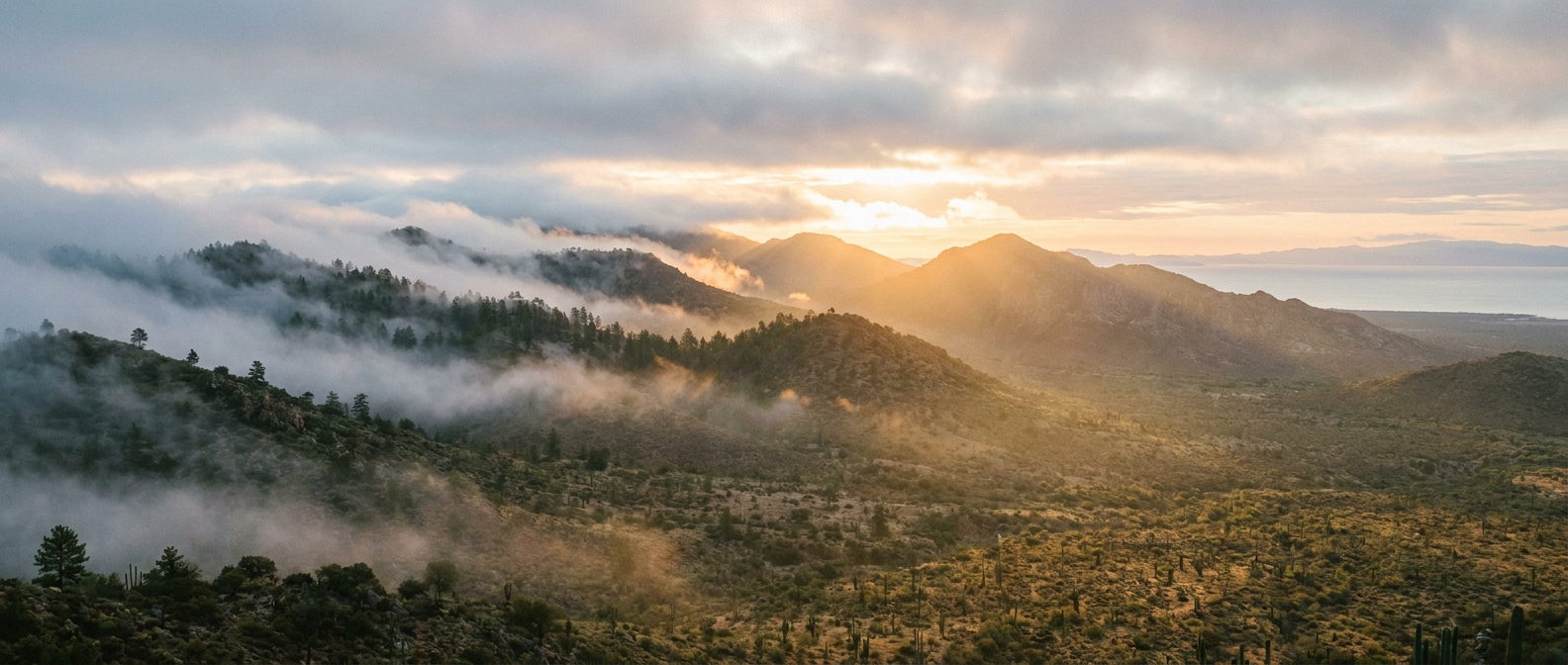
The Sierra de la Laguna has been a UNESCO Biosphere Reserve since 1994, protecting 112,400 hectares of mountain forest at a latitude where most of Baja is desert scrub. At 1,700 meters elevation, the climate is fourteen degrees cooler than the coast. Within this reserve, a number of cattle ranches have operated continuously for five generations, stewarding both the cows and the forest around them — a working example of land use that is compatible with, and in some cases strengthening, conservation.
RED partners with ranching families within the reserve to offer day visits. You spend the morning helping with cattle work — milking, maintenance, and the daily rhythm of a working ranch. In the kitchen, you learn to make cheese and handmade tortillas on a wood-fired comal. A naturalist guide walks the property and teaches the ecology of the Sierra — its endemics, its water systems, the relationship between forest and cattle. Lunch is a shared meal prepared from the ranch's own dairy and local ingredients, and it is where the conversation deepens: the family shares their perspective on the land, conservation efforts they are part of, and what it means to hold this territory as stewards rather than extractors.
This is not a packaged cultural tour. The family participates in shaping the day based on what they are actually doing that morning. Some days involve more cheese-making; others focus on the animals or the forest. RED provides translation and field knowledge, but the experience is built on the real work and the family's willingness to include you in it.
Depart from your hotel in La Paz at 8:00 a.m. The 90-minute drive south into the mountains gives you time to transition — leaving coast behind, entering forest. A RED naturalist guide and a local driver accompany you. As you climb, the vegetation shifts: thorn scrub gives way to oak, pine, and endemic plant species found nowhere else at this latitude. By 9:30 a.m., you arrive at a family ranch. Your hosts — a ranching family — welcome you. You change into work clothes. There is no ceremony here; you are coming to help with the morning's actual tasks.
After an hour with the cattle, move to the kitchen. Family members teach you how to make artisan cheese — the process of curdling, cutting, and forming the curds. This is real dairy work, not a demonstration. You participate in the steps, learning the timing and judgment that comes from repeating this work hundreds of times. Next, you learn to make handmade tortillas on a wood-fired comal — the traditional cooking surface. The dough, the heat, the flip — you do it yourself, tasting the difference between your first and your fifth tortilla. By midday, you step outside with the guide for a nature walk on the property. The guide explains the Sierra's endemic species — plants and animals found only here, why this place has been designated a biosphere reserve, and how ranching families are part of the conservation picture.
Return to the kitchen by 13:30. Lunch is prepared from the ranch's own dairy products, fresh vegetables, and local ingredients. The family joins you at the table. This is where the real exchange happens — conversations about what it means to be a ranching family in a protected area, stories about the land, the families' perspectives on conservation and restoration efforts, and the centuries-old traditions that are still practiced. The guide translates and contextualizes, but the conversation is direct. By 15:00, you begin the return journey to La Paz, arriving at your hotel by 16:30 or 17:00, depending on traffic.
A family with generations of experience stewarding cattle and land within the biosphere reserve. They work their ranch daily — milking, maintaining pastures, managing the relationship between animal husbandry and forest ecology. RED partners with them to offer specific dates and schedules, coordinated around the family's actual work calendar.
Trained in the Sierra's ecology, history, and conservation status. Provides translation between you and the family, contextualizes the work you are witnessing, and leads the property walk. Works directly with the family to ensure the day unfolds at their pace, around their schedule.
Lunch is prepared in the ranch kitchen from the family's own dairy products, fresh local vegetables, and traditional preparations. You may participate in some food preparation. The meal is part of the cultural exchange — sitting and eating together is where deeper conversation happens.
Coordination with the family, transportation from La Paz, scheduling around the family's work, and ensuring safety and comfort throughout. RED is responsible for all logistics and communication, so the family and you can focus on the experience itself.
Life at Sierra Rancho is not a tourist performance. It is a genuine invitation into a family's working day. You will get dirty. You will work. You will sit at a family table. If this appeals to you — if you are someone who wants to see how conservation and tradition coexist in a living landscape — this is the experience.
The ranching families who partner with RED do this on their own terms and timing. We coordinate carefully to ensure the day works for both you and them. If you have a traveler who fits this frame — someone curious about mountain ecology, respectful of working families, and willing to participate rather than observe — describe the dates they are considering and their comfort level with hands-on ranch work. We will respond within two working days with a proposal on timing and logistics.