RED curates experiences in the four most distinctive ecosystems of Baja California Sur. Each chapter is a research-grade territory with specific permits, timing windows, and a field team that has been there for a decade.
Baja California Sur holds ecosystems that exist nowhere else at this latitude on the Pacific coast. Three of the four chapters are protected at the federal level — UNESCO World Heritage sites or marine reserves. One sits in a working landscape where tradition and conservation have merged. In each place, RED holds permits that are not available through standard tour operators or local guides on a daily-departure basis. Access requires briefing, timing, and field knowledge that only comes from sixteen years of continuous operation on the peninsula.
When a designer briefs us, we respond by articulating which chapter — or which sequence of chapters — will serve their traveler's ambition. The brief becomes the itinerary.
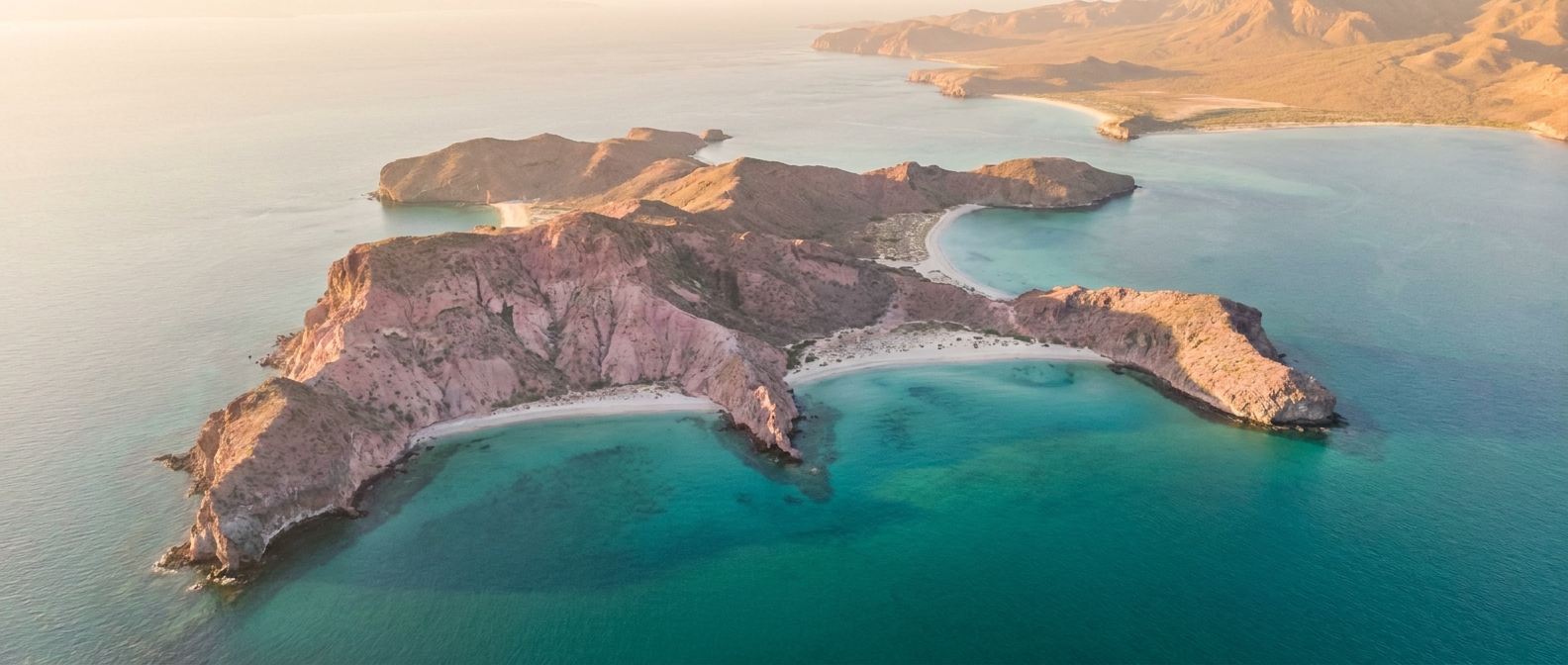
The archipelago has been a UNESCO World Heritage site since 2005 and one of the most tightly managed marine protected areas on the continent since 2007. RED holds a grandfather-permit arrangement with the San Gabriel cooperative for one private captain and naturalist guides, allowing groups of two to eight travelers to explore at depth.
Our portfolio in this territory includes half-day whale shark snorkeling from La Paz, full-day expeditions to Balandra Bay's hidden beaches, and private SCUBA diving for certified divers seeking deep reef work. Most immersive is the multi-day island camp at Espíritu Santo — two to three nights with sea lion encounters at Los Islotes, geology of the rhyolite formations, and meals on the beach under open sky.
The water here is clear, the geology is young, and the access is exclusive. Longer stays reveal what three nights can teach that shorter visits cannot.
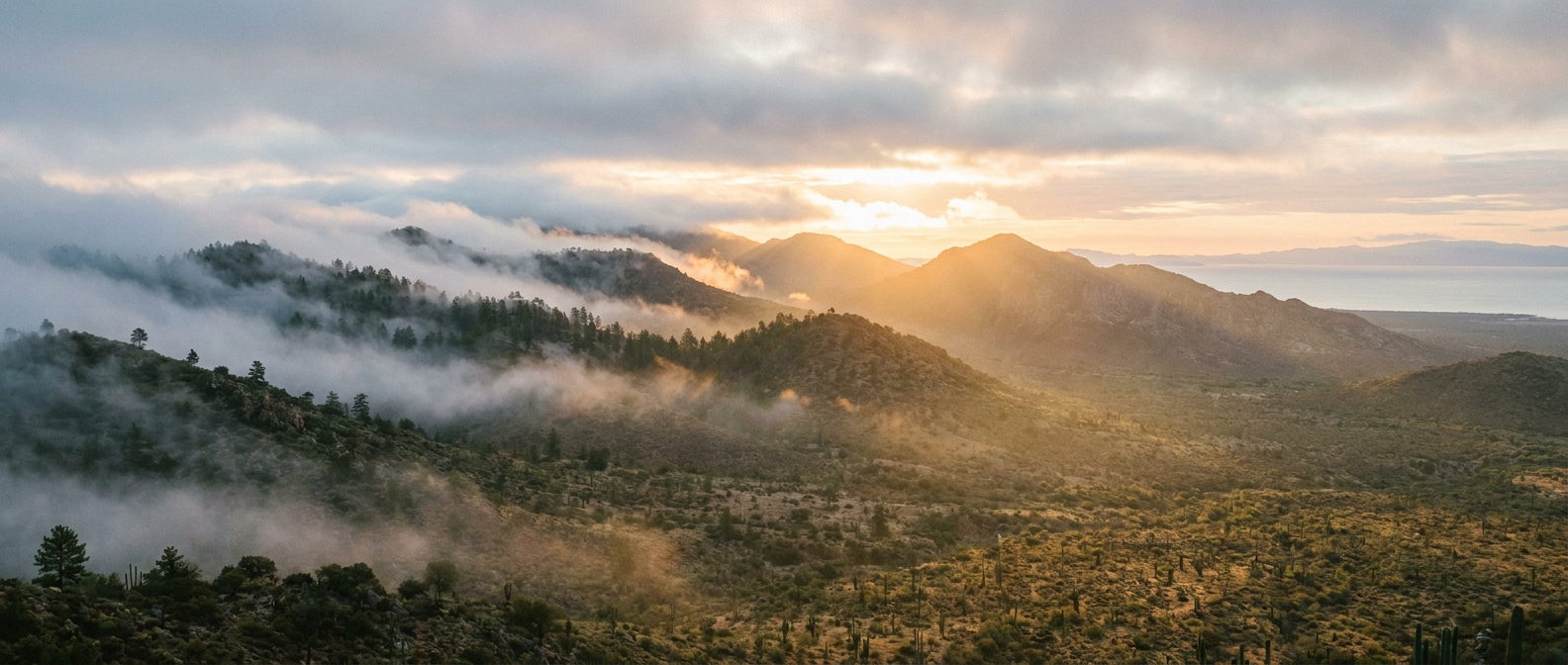
RED operates in two registers here. The first is the Sierra de la Laguna itself — a three-night mule traverse with endemic cloud forest at 1,700 meters, working cattle ranches that have stewarded the canyons for five generations, and morning temperatures fourteen degrees cooler than the coast. Canvas wall tents, granite pools, and a pedagogical arc from terrestrial conservation to walking at rest.
The second is culture and settlement at the peninsula's edges — walking tours of La Paz's street art and mercado history, and day expeditions to Todos Santos and Los Cerritos beaches, where you encounter both tourism and working fishing villages in a single geography. These shorter experiences anchor travelers who want narrative depth without the commitment of mountain travel.
Both carry the same RED signature: curated access, field knowledge, and a richer reading of landscape than the conventional route provides.
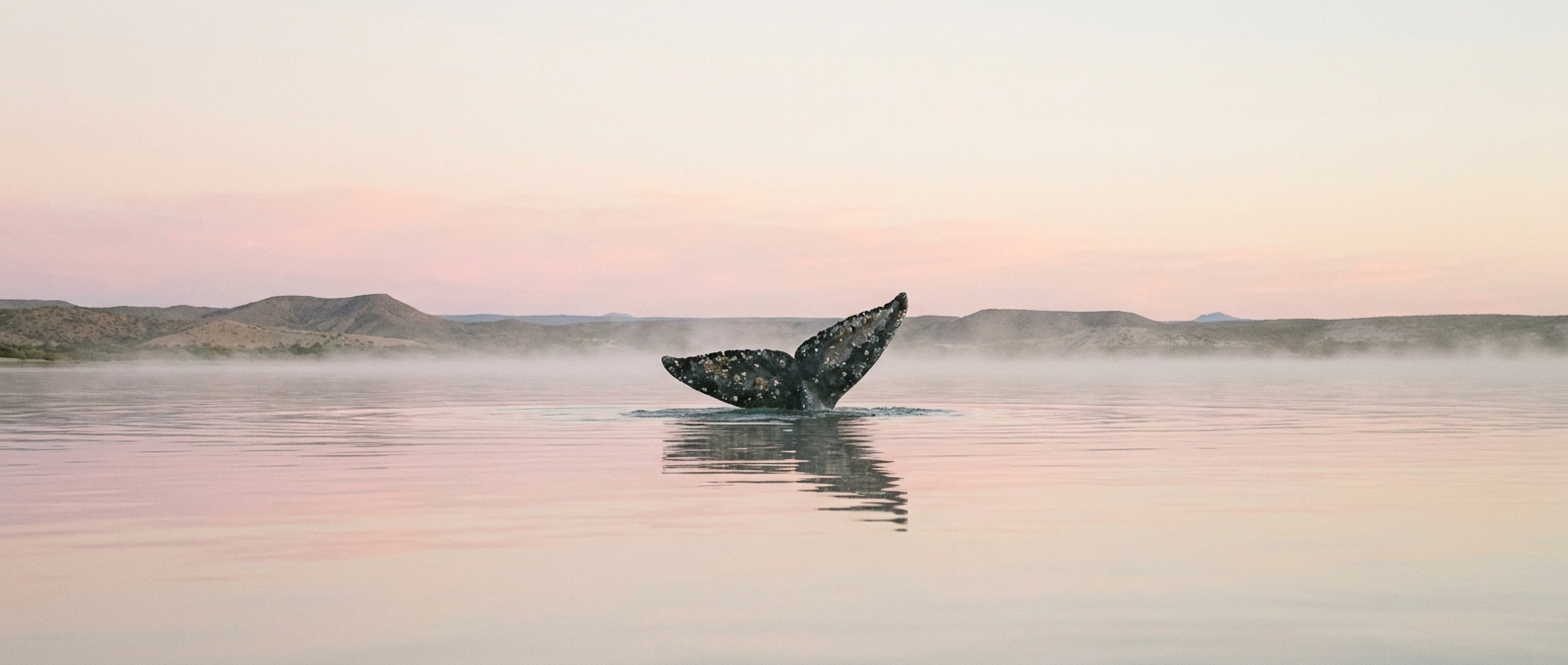
From December through March, RED operates whale watching day trips departing La Paz in the early morning, traveling 2.5 hours north to Puerto Chale, then boating through mangrove channels into Almejas Bay (the southern portion of the larger Magdalena Bay complex). The journey includes ground transportation, a bilingual naturalist guide, lunch, and 4.5 hours on the water with your captain.
Depending on timing within the season, you may witness mating whales or encounter a calf at play. The experience is active observation — you are not approaching; you are patient in the habitat where they are arriving. The lagoon is a nursery, and the whales' behavior is their own, not choreographed for tourism.
This is RED's accessible entry to seasonal whale biology. For designers seeking deeper immersion in protected lagoon ecology and multi-day research contexts, we also coordinate custom multi-day programs in partnership with the Mayoral cooperative and other permitted operators.
See the whale watching day trip →Most designers come to us with one chapter in mind. We often propose two.
— The RED team
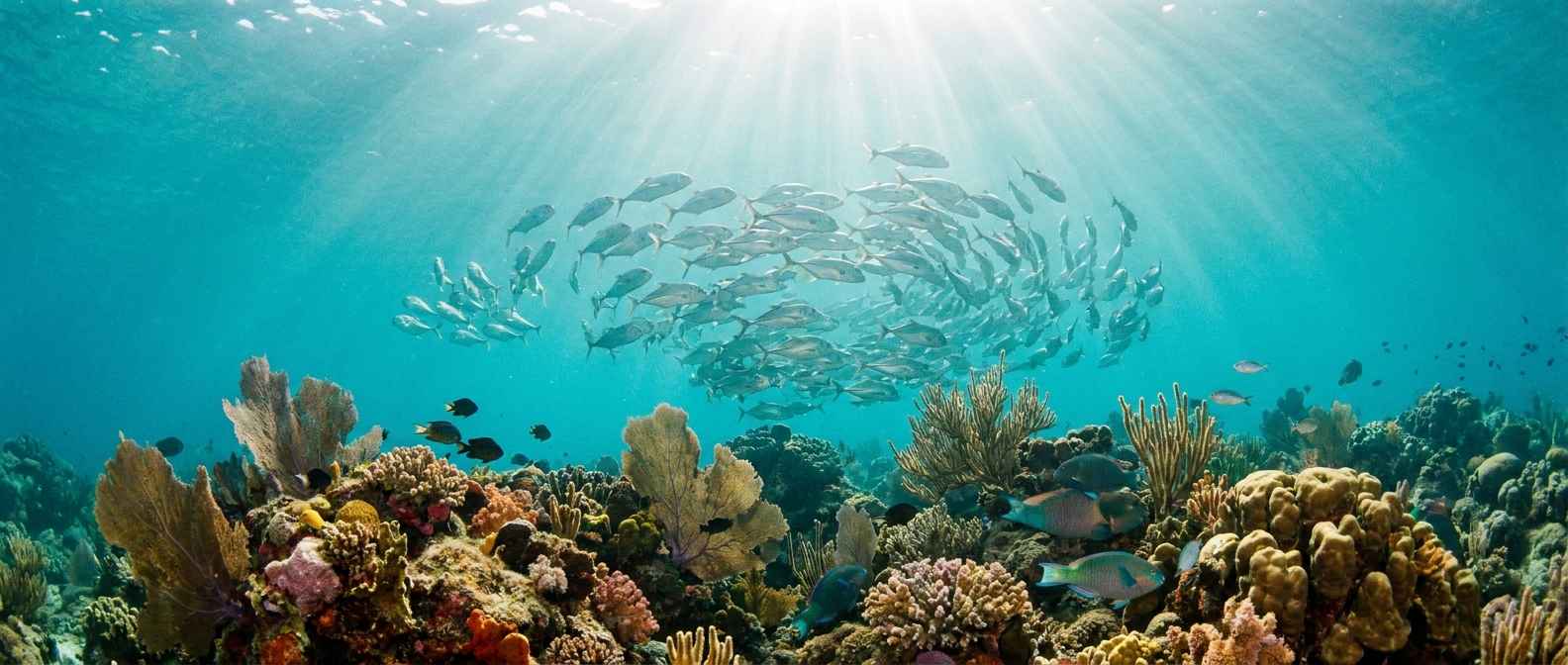
Fifty kilometers north of Los Cabos, Cabo Pulmo is a fishing community that stopped fishing in 1995 and became stewards of a recovering marine reserve. A peer-reviewed survey found total biomass had increased 463% — the largest reef recovery ever documented in a protected area this small and previously depleted. In the water, you encounter schools of jacks, grouper the size of a Labrador, and bull sharks moving with indifference.
RED operates no daily departures to Cabo Pulmo. We go when the sea cooperates, when the community is receiving visitors, and always with marine biologists — often including researchers who worked on the recovery study itself. These multi-day expeditions are designed for institutions, research teams, and designers seeking tangible participation in conservation science and deep understanding of protected area management.
This chapter is RED's most research-intensive offering. It is where tourism becomes a vehicle for learning and contributing to working conservation.
See the Cabo Pulmo research expedition →The strongest itineraries are those that hold two chapters in sequence, allowing the traveler to experience ecological and anthropological contrast within a single journey. Three combinations are most common:
Four days combining urban culture and marine geology. Begin with a morning or evening walking tour of La Paz — street art, history, local markets, paceño perspective. Then depart for a two- or three-night island camp at Espíritu Santo, where you encounter sea lions at Los Islotes, snorkel rhyolite formations, and sleep under open sky. This sequence works for cultural explorers, photographers, and family groups seeking both humanity and wilderness in a single journey.
Two immersive days in the La Paz Gulf. A half-day morning whale shark encounter — snorkeling with the largest fish on the planet — followed by an afternoon exploring Balandra Bay's hidden coves and beaches. Both experiences are guided by naturalists, portable in schedule, and accessible year-round. Designers pair this combination for clients seeking high-impact wildlife encounters in a compressed timeframe.
For institutions, research teams, and design-intensive clients, RED coordinates multi-day programs that hold two or more chapters in sequence — mountain ecology into reef work, whale watching into archipelago sailing, cultural immersion into conservation science. These are custom-quoted and planned semester-style, with integrated learning arcs. Only a handful run per year. They range from 5 to 12 days and function as research deliverables, team experiences, and doctoral seminars.
RED does not publish rate cards and we do not run a booking engine. The fit between a traveler and a chapter is established in conversation — two or three exchanges, usually by email. You describe the traveler and the ambition. We respond with what is permitted, who is available, and what we would propose.
We respond to every note within two working days from La Paz. If you have a deadline that is narrower than that, say so and we will honor it.
Describe the traveler, the dates, and the ambition. We will respond with territory, people, and a proposal within 48 hours.
For InstitutionsUniversities, conservation partners, and family offices building a multi-year relationship with the peninsula. Multi-cohort pacing and research integration.