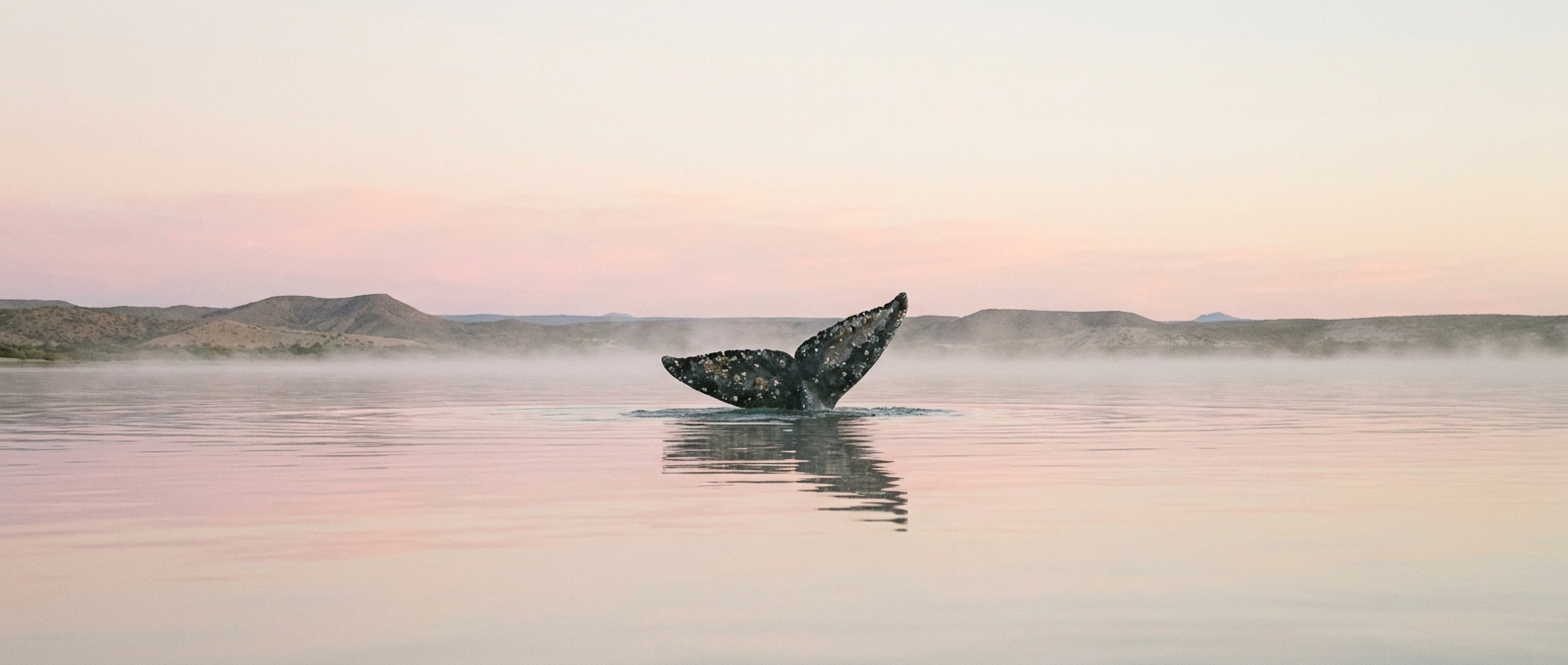
The Water
Whale sharks, aggregation, and the gulf.
A morning immersion with the world's largest fish, their ecology, and the conservation protocols that protect their aggregation in La Paz Bay.
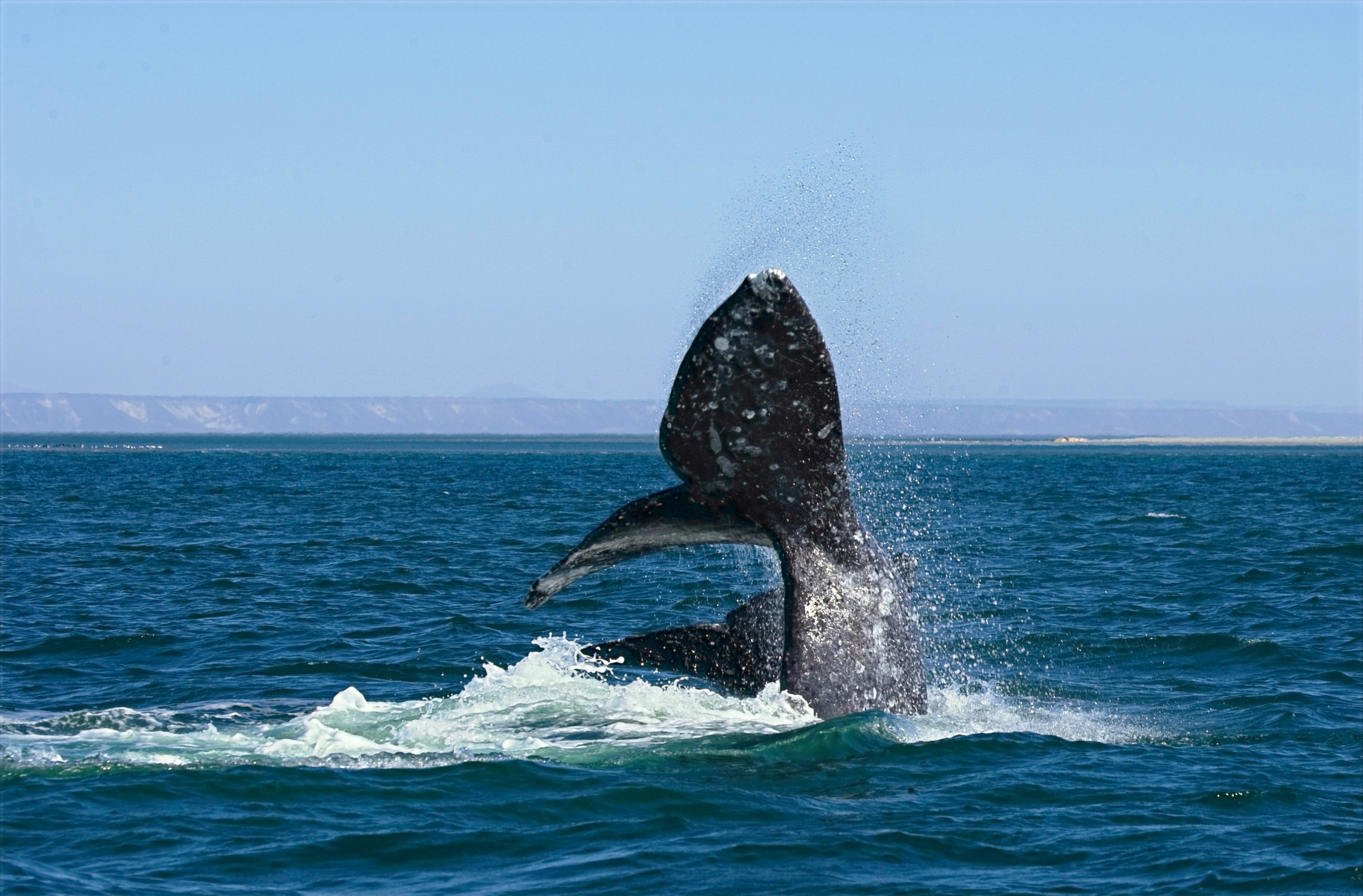
Whale sharks—Rhincodon typus—are the true gentle giants of the oceans. At up to 18 meters in length and weighing as much as 21,500 kilograms, they are the largest fish on Earth. They feed exclusively on plankton, filtering millions of organisms through their gills each day, moving through the water with deliberate grace. The largest fish on the planet is entirely herbivorous and poses no threat to swimmers who enter the water alongside them.
Each year, beginning in October and continuing through April, whale sharks return to the waters off La Paz to feed in an aggregation that makes this bay one of the most reliable viewing locations in the world. They come for the richness of the sea—seasonal upwells that concentrate their prey—and the cleanliness of the water. RED's snorkeling experience puts you in the observation zone during the morning hours, when light is optimal and the sharks are most active, accompanied by a bilingual naturalist guide trained in both whale shark ecology and the regulatory protocols that govern all in-water interaction with these animals.
— Jacques Cousteau, "The world's aquarium." La Paz Bay, Baja California Sur.
Gather at Muelle Fiscal, the public dock in central La Paz, in the early morning darkness. Meet your bilingual naturalist guide and the boat captain. During a thirty-minute briefing on the dock, your guide will walk you through whale shark ecology—their size, feeding behavior, seasonal migrations, and why they aggregate in La Paz Bay. You will also receive detailed instruction on the protocols that govern snorkeling in the observation zone: approach distance, entry and exit technique, hand signals, and how to move in the water without alarming the animals. These protocols are enforced by the Natural Protected Areas National Commission (CONANP) and are non-negotiable.
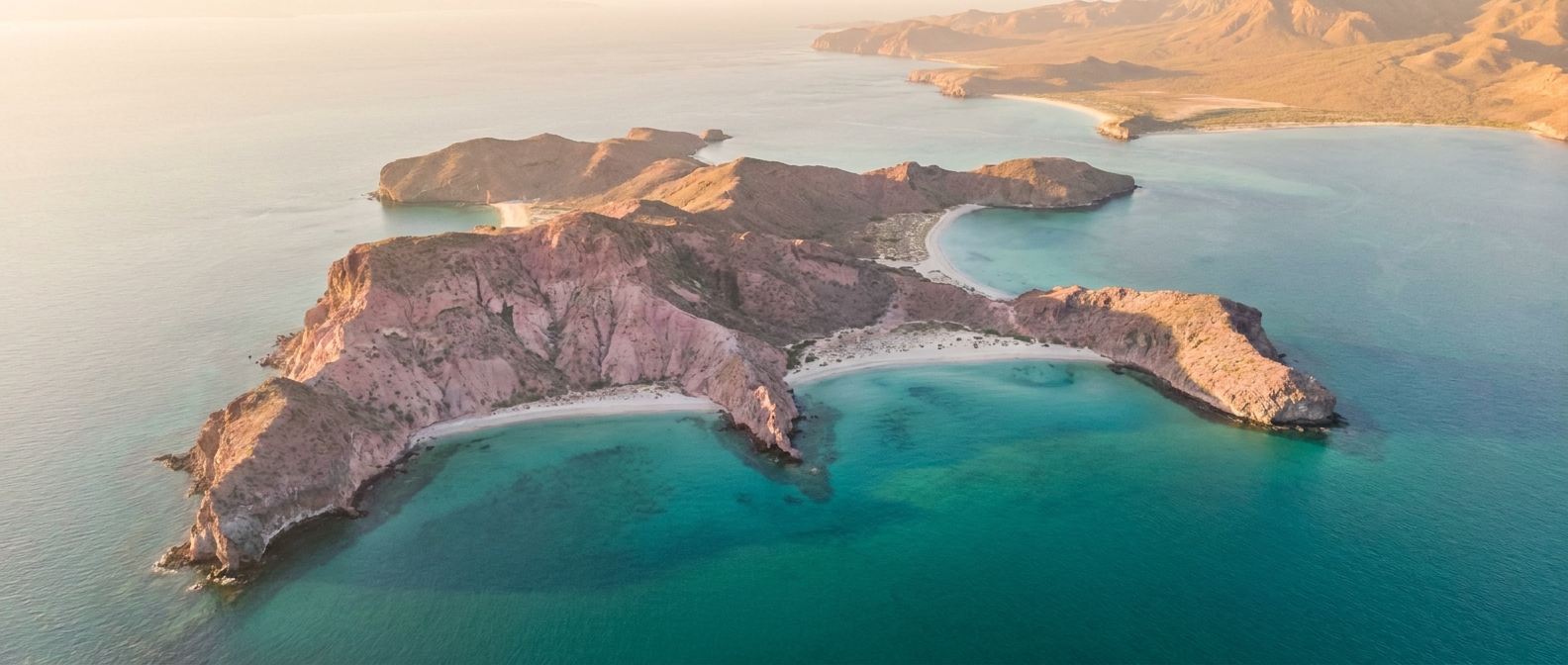
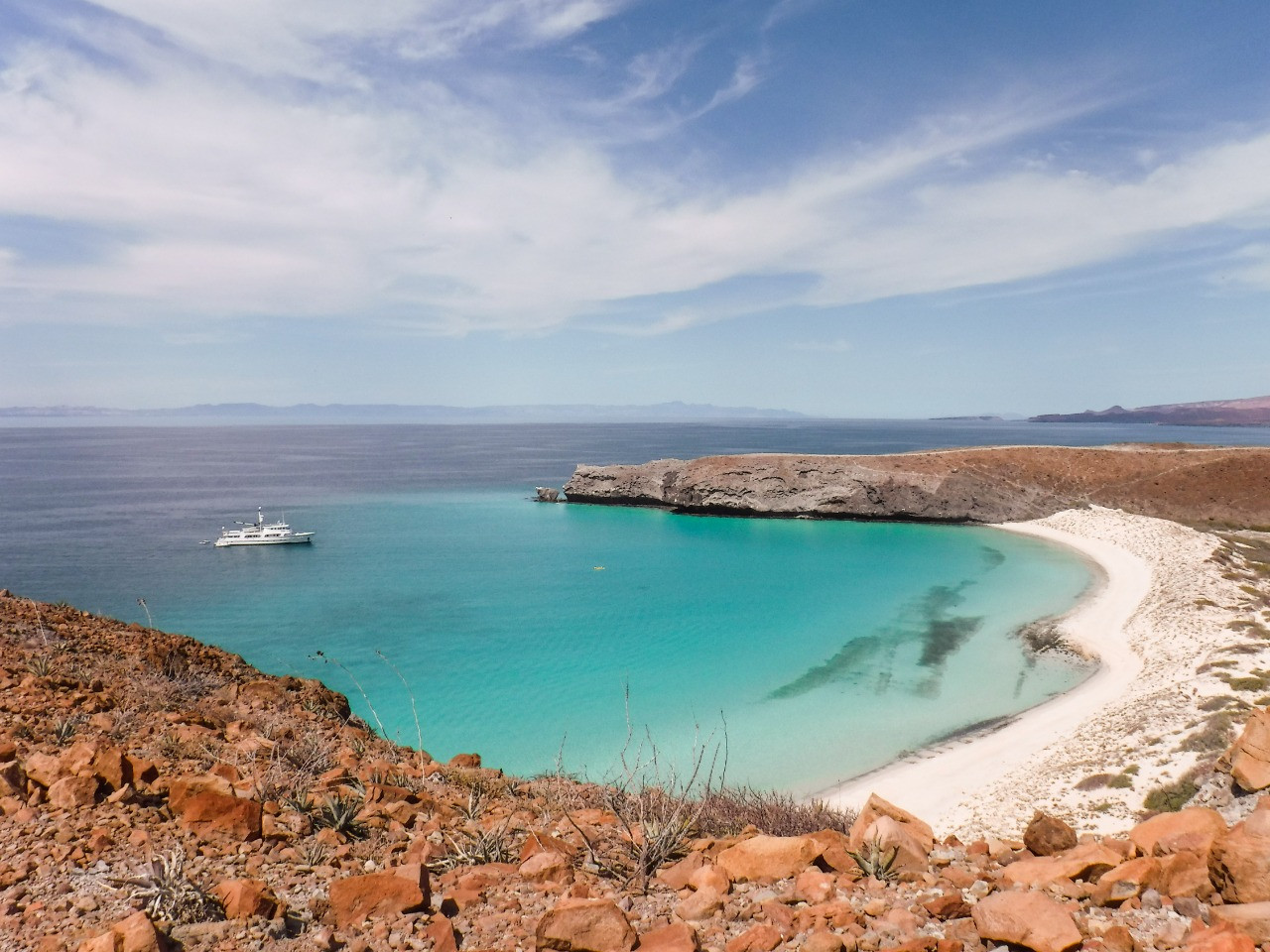
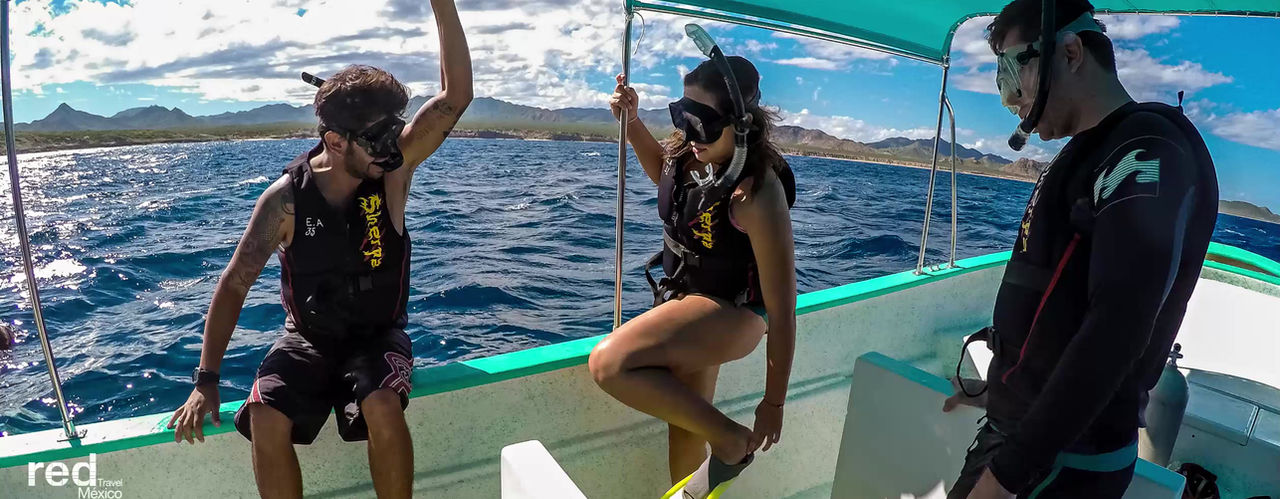
Board a 27-foot fiberglass skiff with full shade, cushioned seating, dry storage, and a marine toilet. The boat ride to the observation zone takes approximately thirty minutes. The morning light on the gulf waters reveals the landscape of La Paz Bay and the surrounding sierra. Your guide will continue to brief you during transit, pointing out landmarks and deepening your understanding of the region's marine environment. As you approach the zone, lookouts scan the horizon for the telltale dorsal fins and water disturbances that signal whale shark presence.
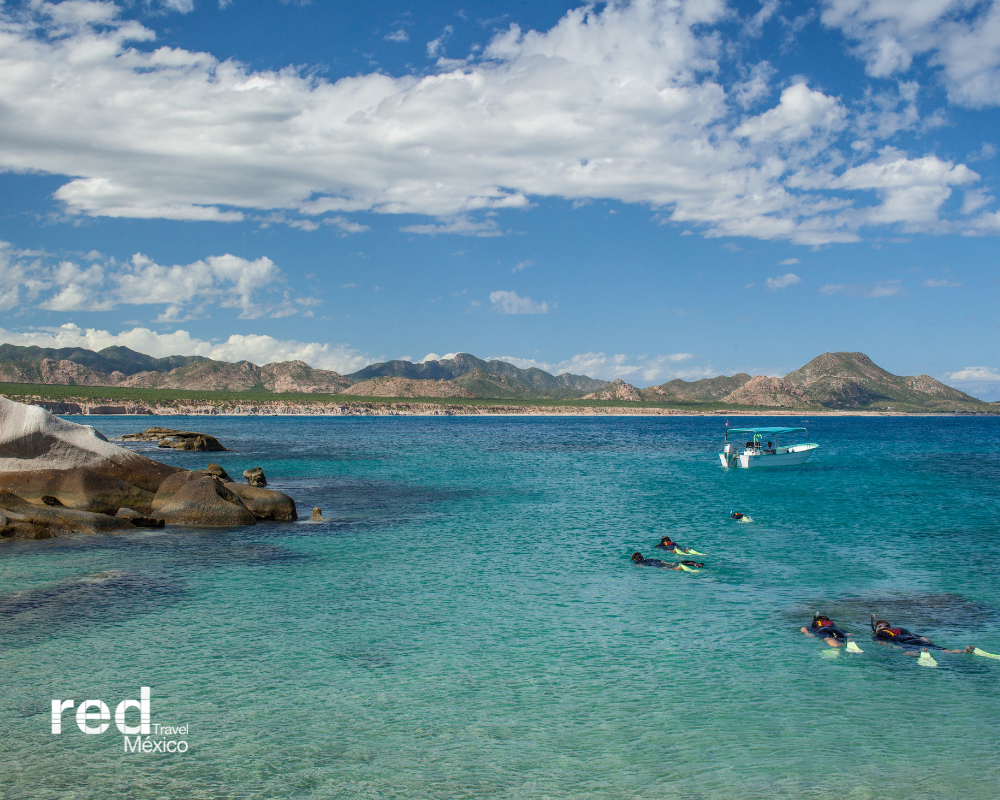
Upon arrival in the observation zone, you will wait for your turn to enter the water. During peak holiday periods when boat activity increases, RED may conduct boat-based observations of surrounding areas while awaiting entry. When a whale shark is positioned favorably, your guide will enter the water first, establishing position and signaling you to follow. With your guide at your side, you will move slowly and quietly, maintaining proper distance and approach angle. You may remain in the water for as long as the shark is present and compliant with protocol—typically thirty minutes to an hour of active viewing time, depending on conditions and animal behavior. Water temperature is approximately 26–29°C (78–84°F) in season.
A trained marine naturalist fluent in both English and Spanish. Specializes in whale shark ecology, behavior, and conservation. Leads all water-entry protocols and maintains safety and regulatory compliance throughout the experience. Provides real-time interpretation during the encounter.
An experienced captain who knows La Paz Bay intimately. Operates a 27-foot fiberglass skiff equipped with full shade, life safety equipment, and navigation systems. Coordinates with observation zone traffic and maintains vessel safety and comfort throughout the morning.
RED coordinates all logistics, timing, and regulatory compliance with CONANP. Ensures punctuality (critical for maintaining permit validity), manages group composition and safety briefings, and handles all pre-experience arrangements and follow-up.
Clean towels, refreshments including two beers per person, and fresh water provided throughout the morning. All beverages and snacks included in the experience.
The whale shark snorkeling experience is RED's gateway to the Gulf of California's marine ecology. It is built for travelers interested in marine life, comfortable in water, and willing to embrace the reality of wildlife encounter: we do not guarantee sightings, though aggregation patterns make La Paz Bay exceptionally reliable during the October–April season. Timing, weather, and animal behavior ultimately govern what unfolds on the water.
If you have a traveler ready for a morning immersion with the world's largest fish—someone curious about whale shark ecology, comfortable with early mornings and sun exposure, and flexible about outcomes—share the dates they are considering and their comfort level in the water. We will respond within two working days with availability, pricing, and any questions about the experience.