Gulf & Island
Whale sharks, rhyolite, and open water.
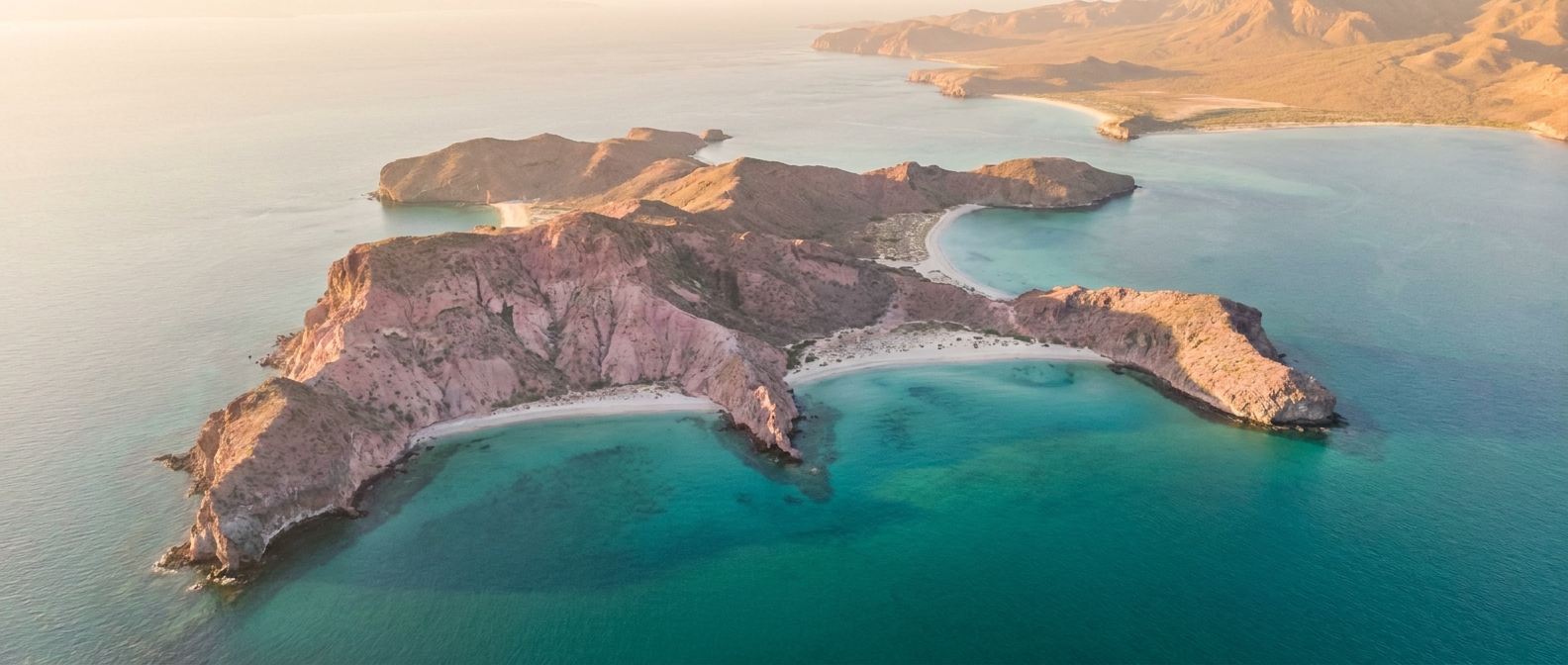


A full-day immersion in the La Paz Gulf waters: feeding with the largest fish on the planet, then island geology, sea lions, and snorkeling at Espíritu Santo.
The Espíritu Santo archipelago has been a UNESCO World Heritage site since 2005 and one of the most tightly managed marine protected areas on the continent since 2007. Thirty-two kilometers north of La Paz, a chain of pink rhyolite islands rises from turquoise channels that deepen to 1,200 meters. The waters that feed these islands also attract whale sharks — the world's largest fish — to seasonal aggregations where they come to feed on fish spawn and plankton blooms.
This experience combines morning whale shark snorkeling in the open-water observation zone with afternoon navigation of Espíritu Santo's beaches, the Los Islotes sea lion colony, and the island's young geological signature. You encounter two separate biological systems in a single operational package: pelagic biomass and island-protected marine life. A bilingual naturalist guide briefs you on whale shark ecology and archipelago natural history throughout. Meals and snorkel equipment are included; the sea and schedule remain the variables.
— Jacques Cousteau on the Sea of Cortez: "the world's aquarium"
Meet at Muelle Fiscal, La Paz waterfront, before sunrise. Depart early for the short boat ride to the observation zone where whale sharks aggregate to feed on fish spawn and plankton blooms during seasonal upwells. Your bilingual naturalist guide will brief you on whale shark ecology and behavior, as well as the regulatory protocols that govern snorkeling in this federal protected zone. If weather and safety conditions permit, you enter the water accompanied by your guide to observe the whale sharks at close range. The observation is active and patient—you are not approaching the animals; you are present in their feeding habitat. Depending on visibility and aggregation size, you may encounter one animal or several. Return to shore by late morning for breakfast and a brief rest.
Depart mid-morning for the one-hour journey to the Espíritu Santo archipelago. As you navigate alongside the islands, your captain and guide brief you on the geology of the pink rhyolite formations, which are geologically young and exposed only at this location on the Pacific coast. Arrive at a secluded beach in Espíritu Santo for a cooked lunch prepared aboard. After lunch, continue to Los Islotes, a small rocky outcrop where a colony of California sea lions hauls out and plays in the shallow water. Enter the water accompanied by your guide to observe the sea lions' behavior and snorkel with tropical reef fish. Depending on current and sea state, you may explore additional coves and beaches on the island before the final departure for La Paz. Return to the city by late evening.
A marine naturalist trained in whale shark behavior, archipelago geology, and sea mammal ecology. Briefs travelers on federal protected area regulations and conducts real-time interpretation throughout the day. Coordinates water entry and safety protocols in coordination with the captain.
Licensed captain with fifteen years of experience navigating the La Paz Gulf and Espíritu Santo waters. Holds federal permits for whale shark observation and marine protected area access. Coordinates timing around weather, aggregation activity, and sea state.
All meals prepared fresh aboard vessel. Lunch includes local fish, seafood, fresh produce, and prepared provisions. Bilingual crew ensures dietary needs and preferences are accommodated. Coolers with hydration and snacks available throughout the day.
The cooperative that holds the grandfather permit for RED's private access to Espíritu Santo and Los Islotes. RED's operations are embedded with the cooperative's stewardship model and contribute directly to the conservation of the protected area.
Whale Shark & Espíritu Santo is a full-day, high-activity offering. It is built for travelers who have water comfort and can spend six to eight hours in open boats and snorkeling conditions. The morning is dedicated to whale shark observation in an open-water zone; the afternoon transitions to island snorkeling and beach exploration. Depending on weather and sea state, timing adjusts; RED does not guarantee whale shark encounters or fixed departure times.
If you have a traveler who wants this combination—early morning on the water, pelagic feeding ecology, island geology, and sea mammal encounters in a single day—describe the dates and their water comfort level. We will respond within two working days with availability and operational details.


